Most TVs sound thin, no matter how good the picture is. The fix isn’t always a giant rack of gear — there are a few proven ways to add real cinema sound to a room, each with its own tradeoffs.
Here’s a breakdown of three setups worth considering, what you actually need to build them, and why each one works.
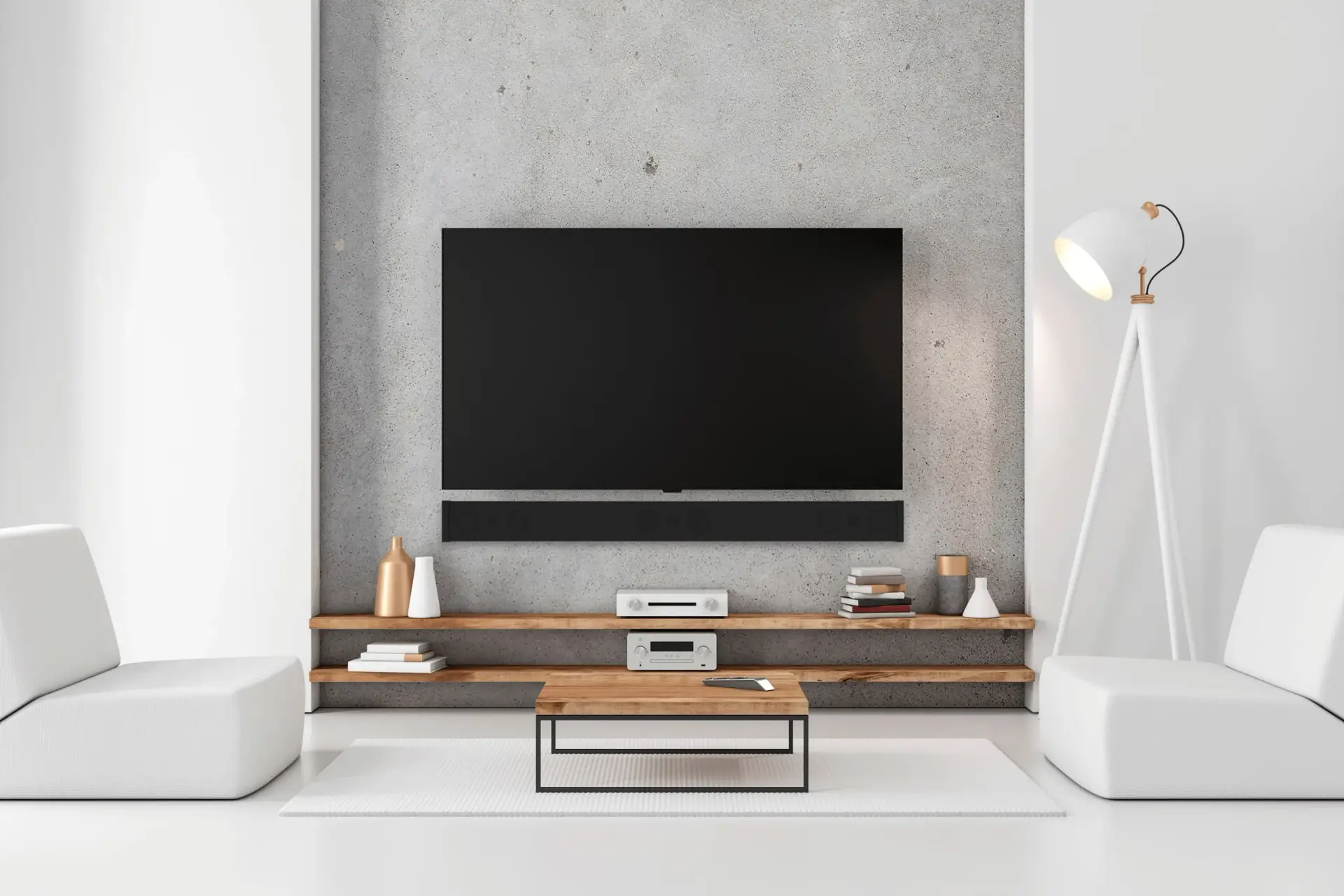
Option 1: 3.1 with a Passive Soundbar
A 3.1 system covers left, center, and right channels up front, plus a subwoofer for the low end. The “passive” version uses a soundbar with no internal amplifier — you drive it from an AV receiver, just like a set of speakers.
What you need:
- Passive soundbar with three discrete channels (Triad, Leon, Klipsch)
- AV receiver with at least 3 channels of amplification
- Powered subwoofer (SVS, Arendal, REL)
- Speaker wire and a sub cable
How it hooks up: The TV connects to the receiver via HDMI eARC. The receiver drives the soundbar through speaker terminals, and the sub connects via RCA from the receiver’s sub output.
Why this works: Passive bars sit cleanly under or above the TV, often inside millwork. You get true L/C/R separation — far better than any all-in-one soundbar — and the receiver handles processing. Future upgrades don’t require replacing the bar.

Option 2: 3.1 with Separates
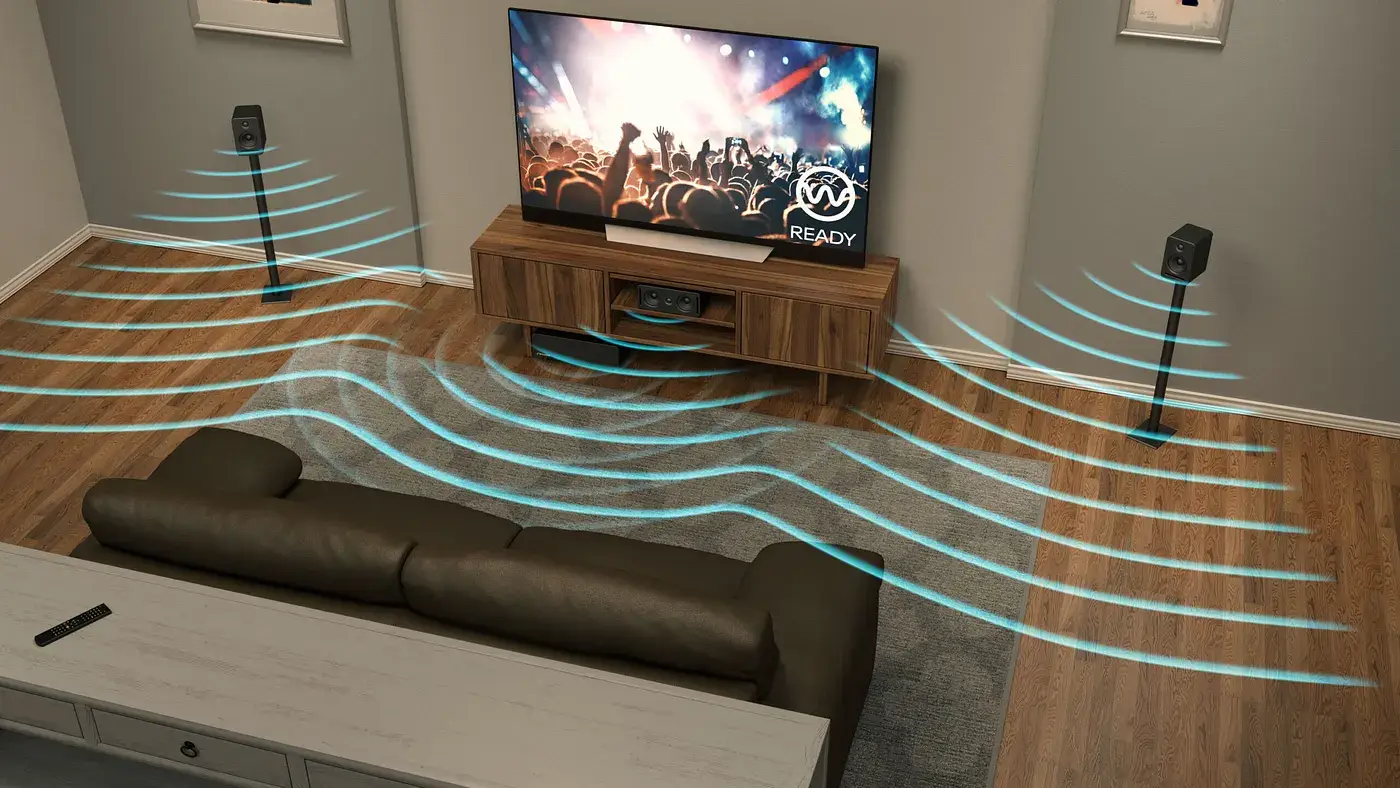
Same channel count, but instead of a soundbar you use three individual speakers — typically two bookshelves or floorstanders for left/right and a dedicated center.
What you need:
- Matched L/R speakers (KEF, Bowers & Wilkins, Revel)
- Matching center channel
- AV receiver
- Powered subwoofer
How it hooks up: Same layout as the soundbar system, but with three separate speakers. Placement matters — L/R should form a triangle with your seating position, and the center should align with the screen.
Why this works: Separates outperform soundbars at the same price thanks to larger cabinets and better dynamics. The tradeoff is aesthetics — more visible equipment in the room.

Option 3: Traditional 5.1 Surround
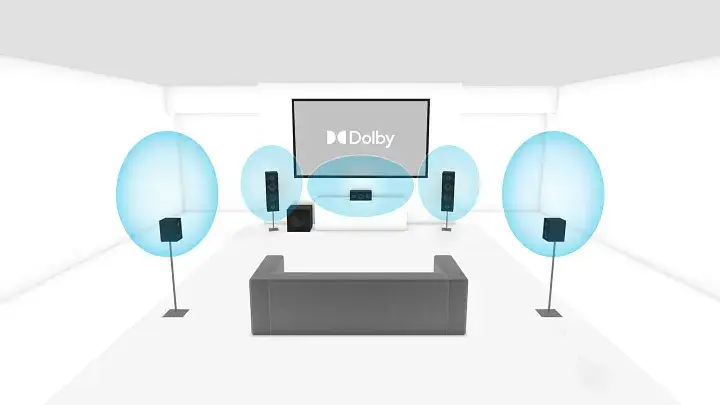
This is the configuration most movies are mixed for. You add two surround speakers behind the listening position to the 3.1 layout.
What you need:
- L/C/R speakers (or passive bar)
- Two surround speakers
- AV receiver with 5.1 channels
- Powered subwoofer
How it hooks up: Surround speakers connect to rear channels on the receiver. Placement should be slightly behind or beside the seating position, above ear level.
Why this works: True surround creates immersion — sound moves around you instead of staying in front. For movies and gaming, the jump from 3.1 to 5.1 is massive.

The TV as a Center Channel: Sony Acoustic Center Sync

Select Sony Bravia TVs allow the screen itself to act as the center speaker. By connecting your AV receiver directly to the TV’s S-Center input, dialogue comes from the screen itself — exactly where the actors are.
This is ideal for:
- Wall-mounted TVs with no space for a center speaker
- Clean, minimalist installations
- Rooms where dialogue clarity is the priority
The tradeoff: You’re tied to that TV brand for future upgrades.
Picking the Right Setup
A 3.1 passive soundbar is the cleanest, most living-room-friendly option. A 3.1 with separates delivers the best audio quality. A 5.1 system is ideal for full cinematic immersion.
If you already own a compatible Sony TV, using it as a center channel can elevate any of these setups.
The common thread across all of them is the AV receiver. That’s the component worth investing in — it determines how everything sounds and performs.
Final Thought
Every room has a right answer. The key is matching the system to how you actually use the space — then dialing in the details so the technology disappears and the experience takes over.
At NXT Level Smart Home, we design and install systems that sound incredible without compromising your space.