August in Houston is not a month. It is a stress test. Whether you are in a two story in Katy, a custom build in Sugar Land, a wooded lot in The Woodlands, or new construction in Cypress, the pattern is the same. Afternoon highs past 100, heat index near 110, and humidity that never really breaks.
During those weeks, cooling becomes the largest single line on your electric bill. Most homeowners respond by adding attic insulation, sealing door sweeps, and pushing the thermostat down another degree. Those things matter, but they are all defensive. By the time heat is in your living room, your air conditioner has already lost the round.
The better approach is to stop thermal energy before it enters the house.
Solar Gain Is the Real Load
Window glass behaves like a magnifier for radiant heat. Even modern low E double pane glass passes a significant amount of solar energy into the room, where it is absorbed by floors, drywall, and furniture.
If your shades sit open all day while the house is empty, you are storing hours of solar radiation in the structure itself. When the system ramps up at 4:00 PM, it is not just cooling air. It is pulling heat back out of thousands of pounds of material that spent the afternoon soaking it up. That is why the house still feels warm an hour after the AC has been running hard.
Automated Shades Handle the Timing You Will Not
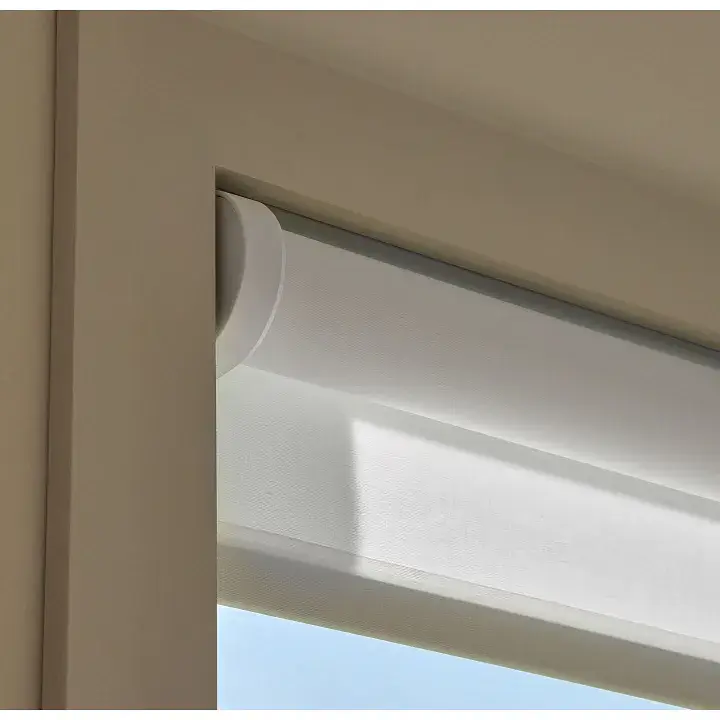
Manual shades only work if someone walks the house every morning and every afternoon. Nobody does that consistently in July and August.
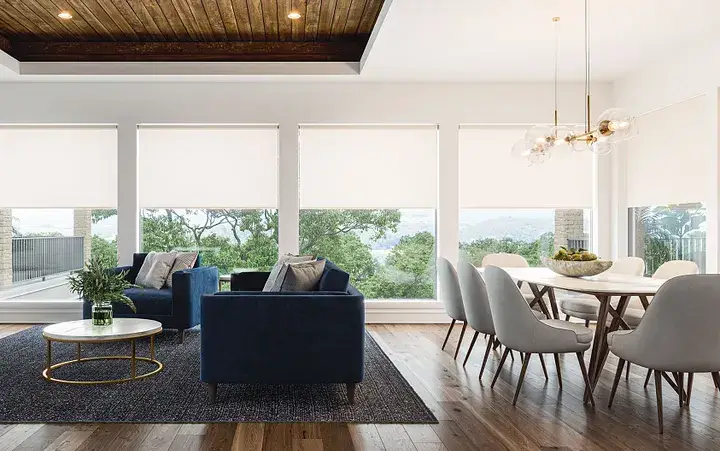
Motorized shades on a Lutron system run off an astronomical timeclock, which means the schedule tracks actual sunrise and sunset for your address and adjusts through the year without anyone touching it. Applied correctly, that looks like:
- East facing glass closing early in the morning, before the sun loads those rooms
- West and south facing glass closing ahead of the worst window, roughly 1:00 PM to 6:00 PM
- Shades opening back up in the evening once the load is off the glass
Fabric selection matters as much as the automation. Solar screen fabrics are rated by openness factor, typically 1 percent to 10 percent. A tighter weave in a darker color rejects considerably more solar heat and glare while still preserving outward view. A more open, lighter fabric gives you more daylight and less rejection. We spec that per elevation rather than putting the same fabric on the whole house, because the west wall and the north wall are not solving the same problem.
The point is not to sit in the dark. The point is to keep the sun off the glass during the four to five hours a day when it actually costs you.
One Thermostat in a Hallway Is Not Enough
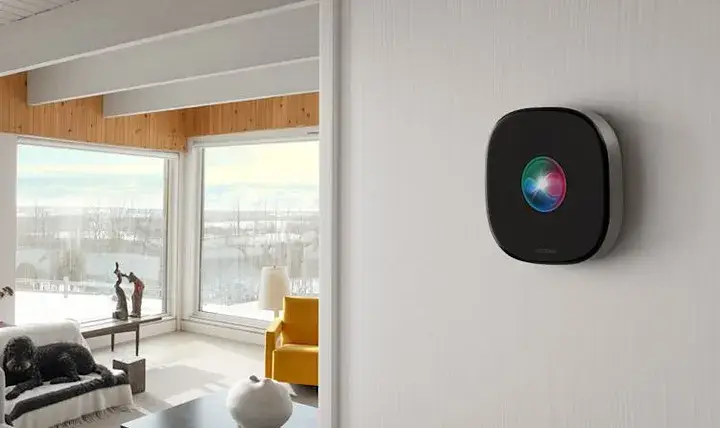
The most common comfort complaint we get in multi story Houston homes has nothing to do with equipment capacity. It is sensor placement.
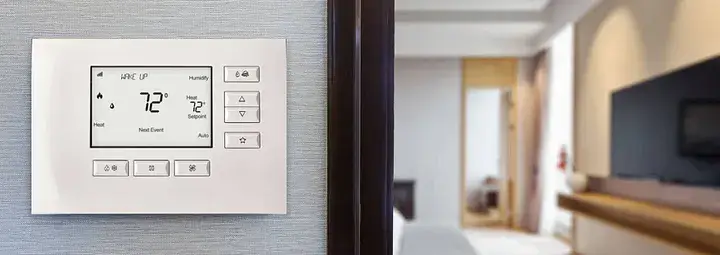
Heat rises. A thermostat in a downstairs hallway can read a comfortable 72 while upstairs bedrooms sit at 78. The system is satisfied and shuts off while half the house is uncomfortable. Drop the setpoint to fix upstairs and you overcool the first floor and pay for it.
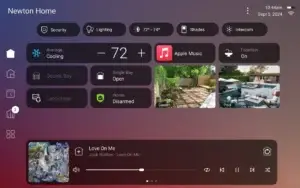
Integrating climate control into Control4 lets us decouple sensing from that one wall unit:
- Remote sensors in the rooms that matter. Primary suite, home office, upstairs media room. The system responds to where people actually are, not to a hallway.
- Humidity as a first class input. In this climate, 74 degrees at 45 percent relative humidity feels better than 71 degrees at 60 percent. Variable speed and multi stage systems running longer cycles at lower speeds pull far more moisture out of the air than a single stage unit short cycling at full blast.
- Damper control in zoned systems. Cooling capacity goes where it is needed by time of day and occupancy instead of being split evenly across a house that is not evenly loaded.
Away and Pre Cool Scenes
Letting the house climb to 80 while you are out and then dropping it to 70 the second you walk in is the most expensive way to get comfortable. The compressor runs at full capacity for hours during the hottest part of the day, and if you are on a time of use plan, you are doing it during the priciest window on the ERCOT grid.
Two scenes solve most of this.
Away. Triggered when you arm the security system or leave the geofence. South and west shades close fully. HVAC setpoints drift up four to five degrees. Interior lighting shuts down. The house coasts instead of fighting.
Pre cool. Rather than waiting for arrival, the system does the heavy cooling earlier in the day while the outdoor temperature and the grid are both lower, then holds with shades down and lets the setpoint drift slightly through the peak. You arrive to a house that is already cool and dry, and the compressor never had to sprint.
Voice for the Adjustments You Actually Make
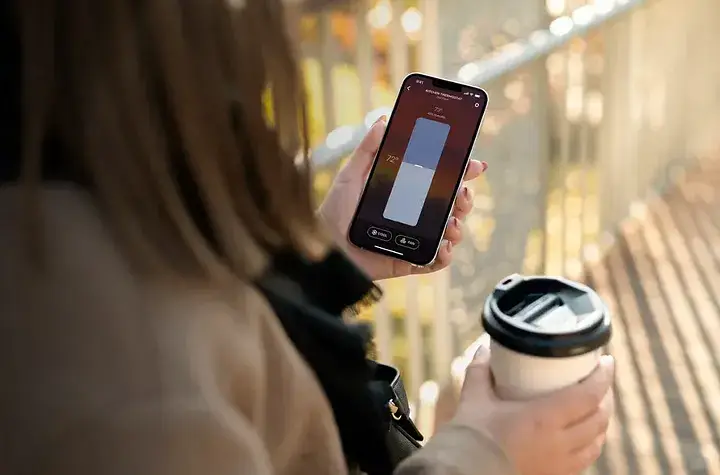
Most day to day changes are small and situational. The sun swings into the living room, or a room fills up with people. On systems where we deploy Josh.ai as the voice layer over Control4, you can say “it is getting hot in here” and the system knows which room you are in, lowers the local shades, and trims the setpoint. No app, no remote, no walking to a keypad.
The Takeaway
Lower summer bills do not come from living in a warm, dark house. They come from managing the building envelope on a schedule, sensing temperature and humidity where people actually live, and shifting the cooling work out of the hottest hours of the day.
Shade automation, zoned climate control with sensors in occupied rooms, and scene based scheduling all attack the same problem from different directions. Each one reduces how much heat the system has to remove, and when it has to remove it. Together they change the shape of the load rather than just the setpoint. Temperature holds more evenly floor to floor, the equipment runs longer and gentler cycles instead of hard short ones, and indoor humidity stays in a range where 74 degrees actually feels like 74 degrees.
None of this requires doing everything at once. Scheduling the shades on west facing glass alone changes the character of a Houston afternoon.